Call now (+34) 658 82 83 76
 Book now
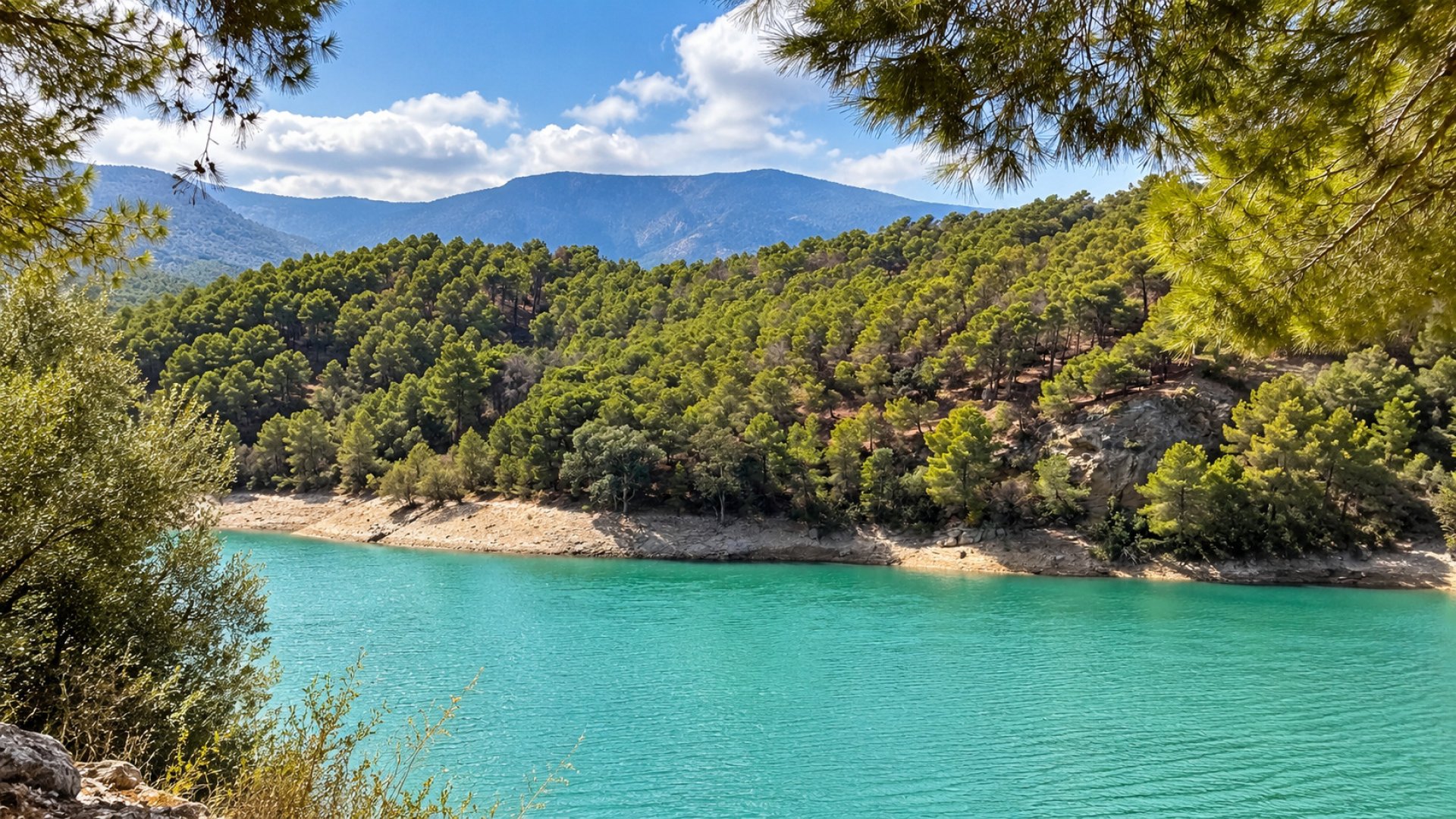
Just over an hour's drive from Marbella lies one of Andalusia's most spectacular natural attractions and undoubtedly one of the excursions we most highly recommend to our guests: Caminito del Rey.
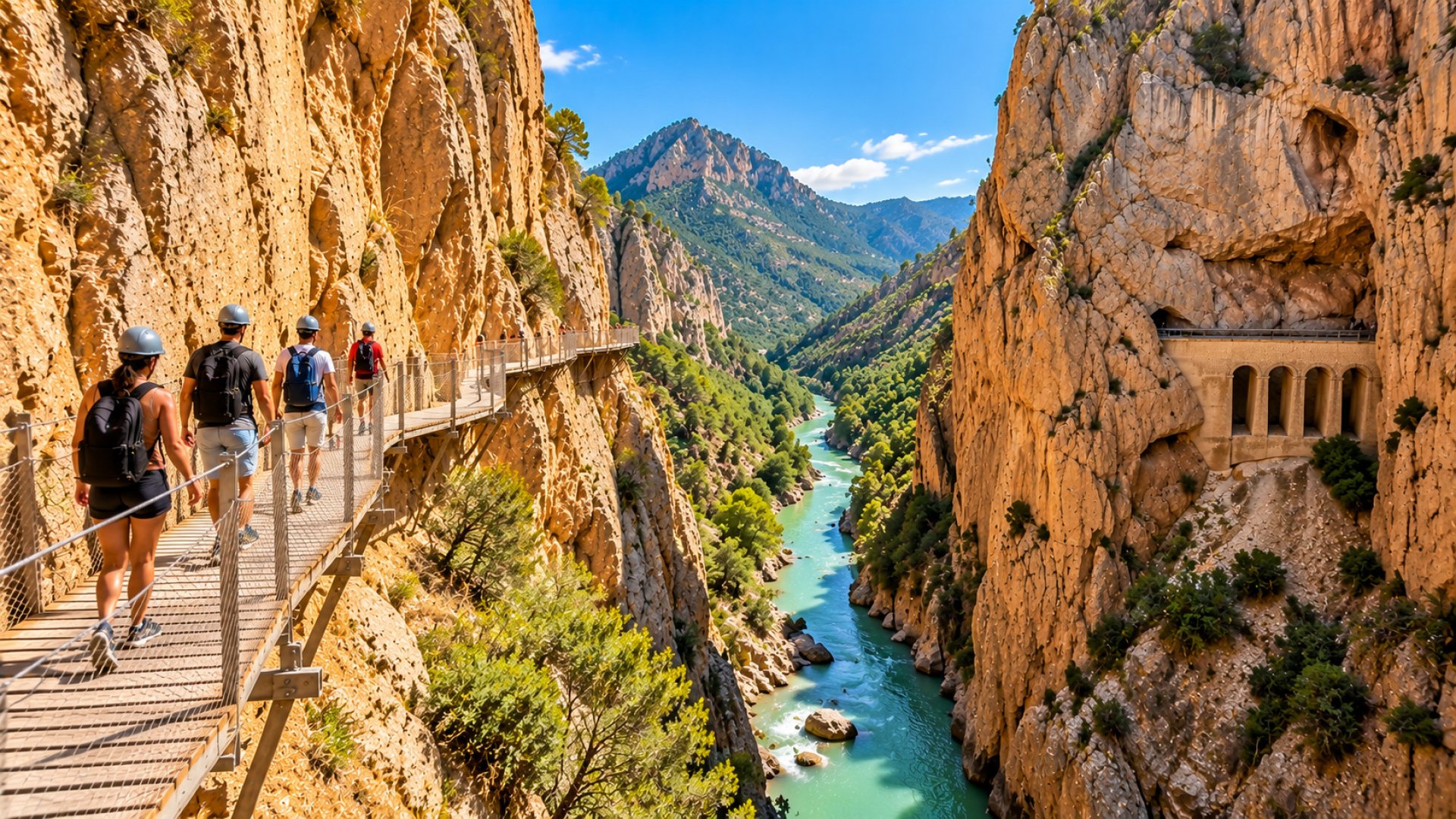
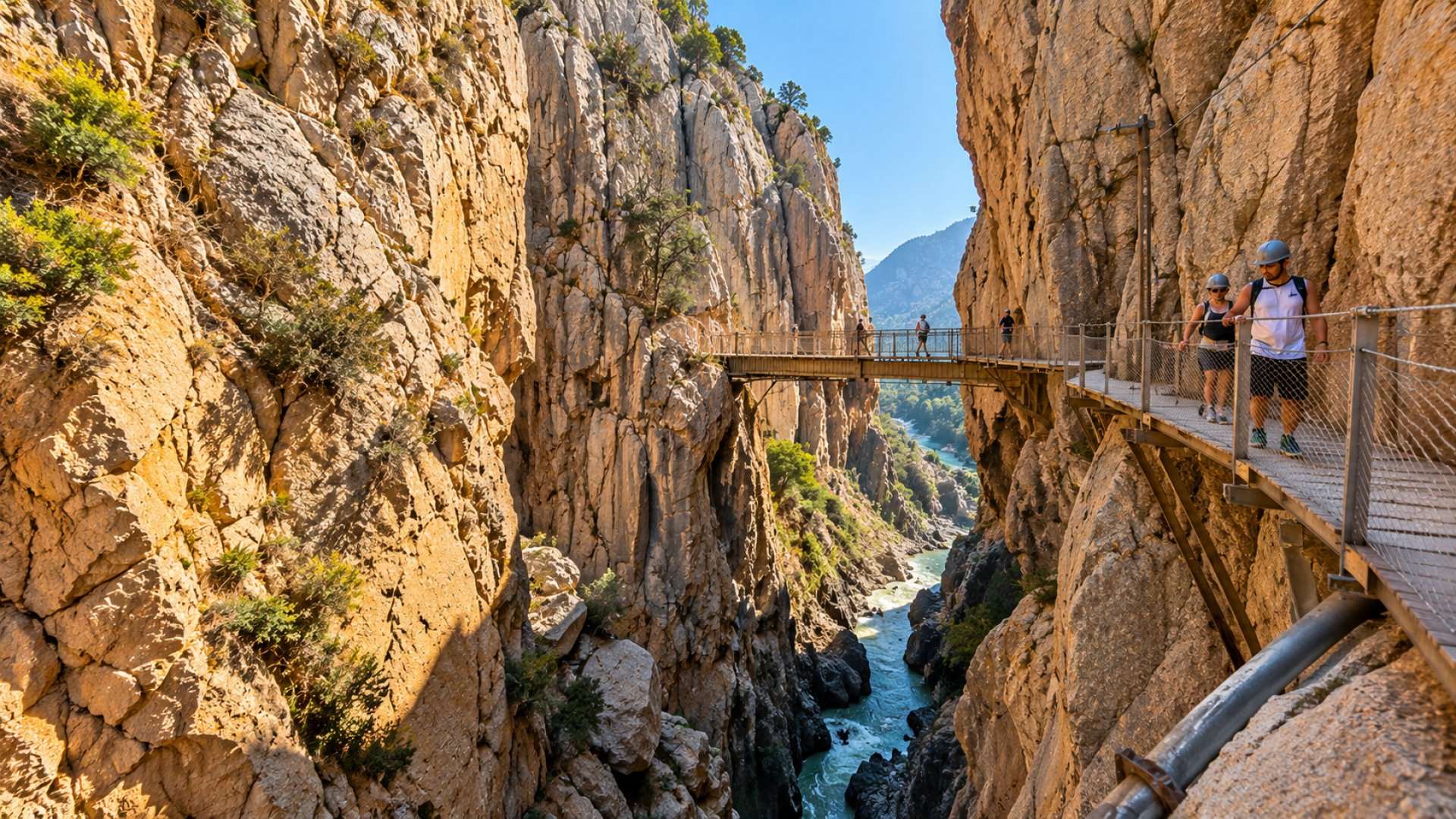
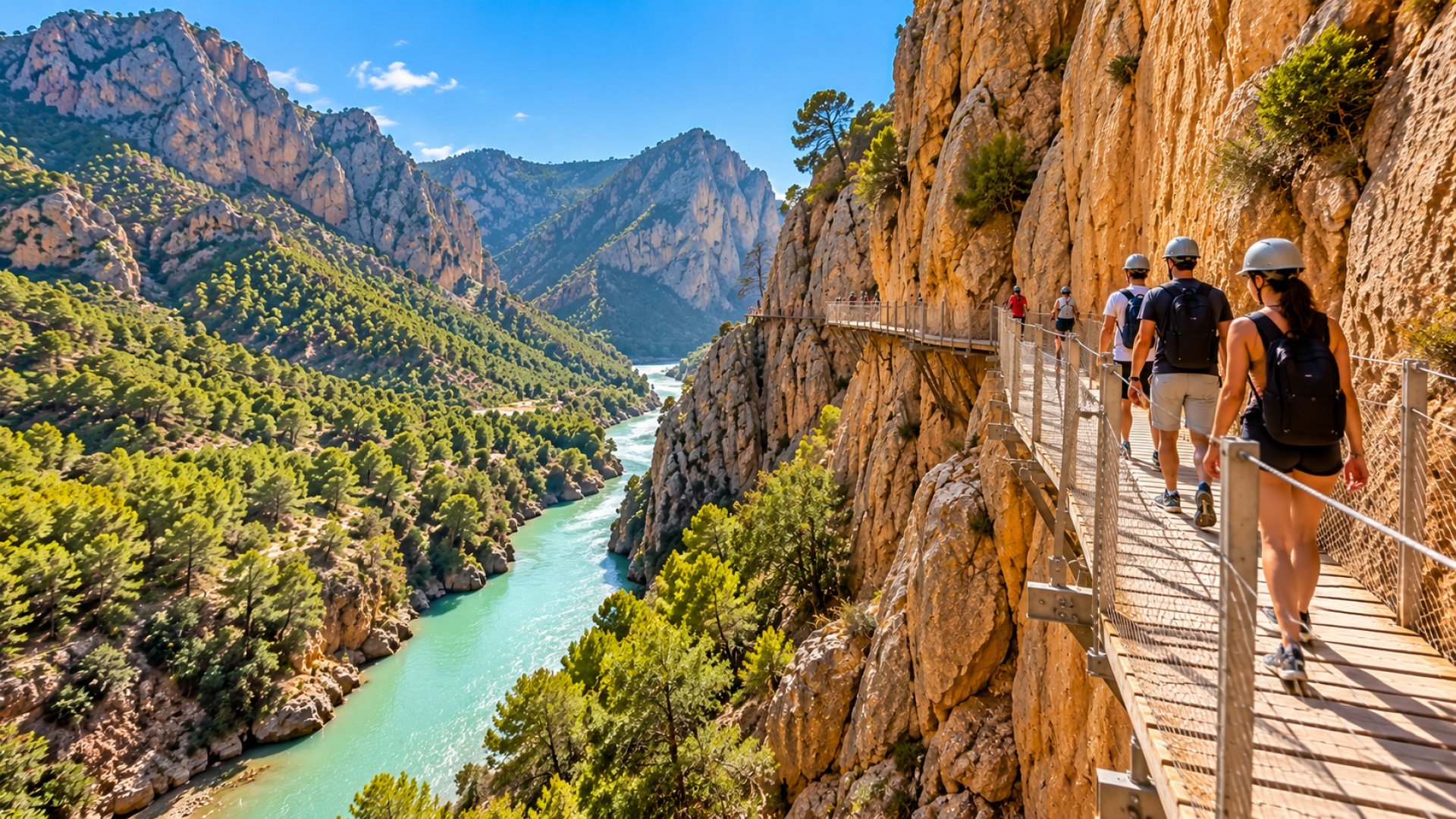
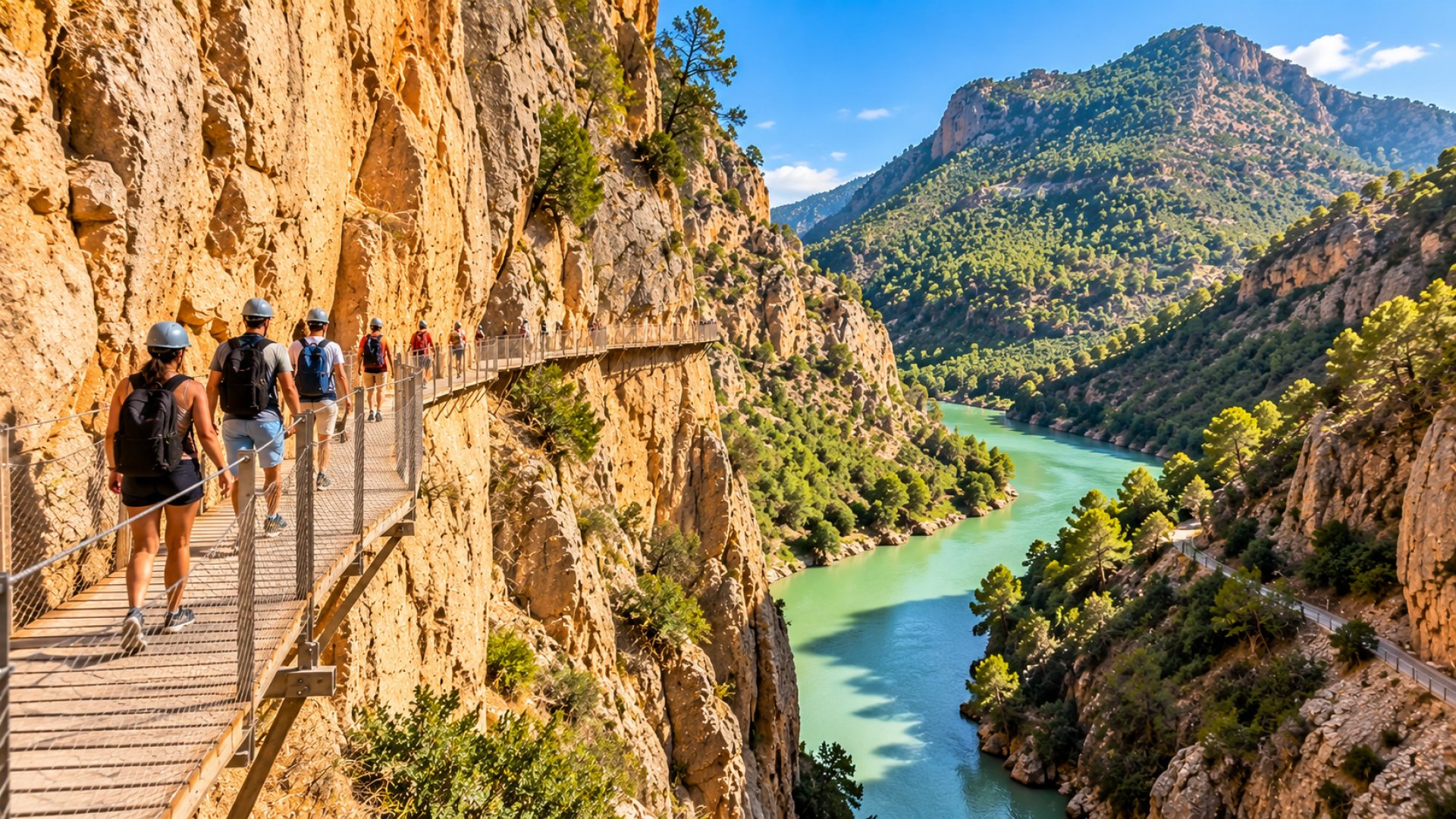
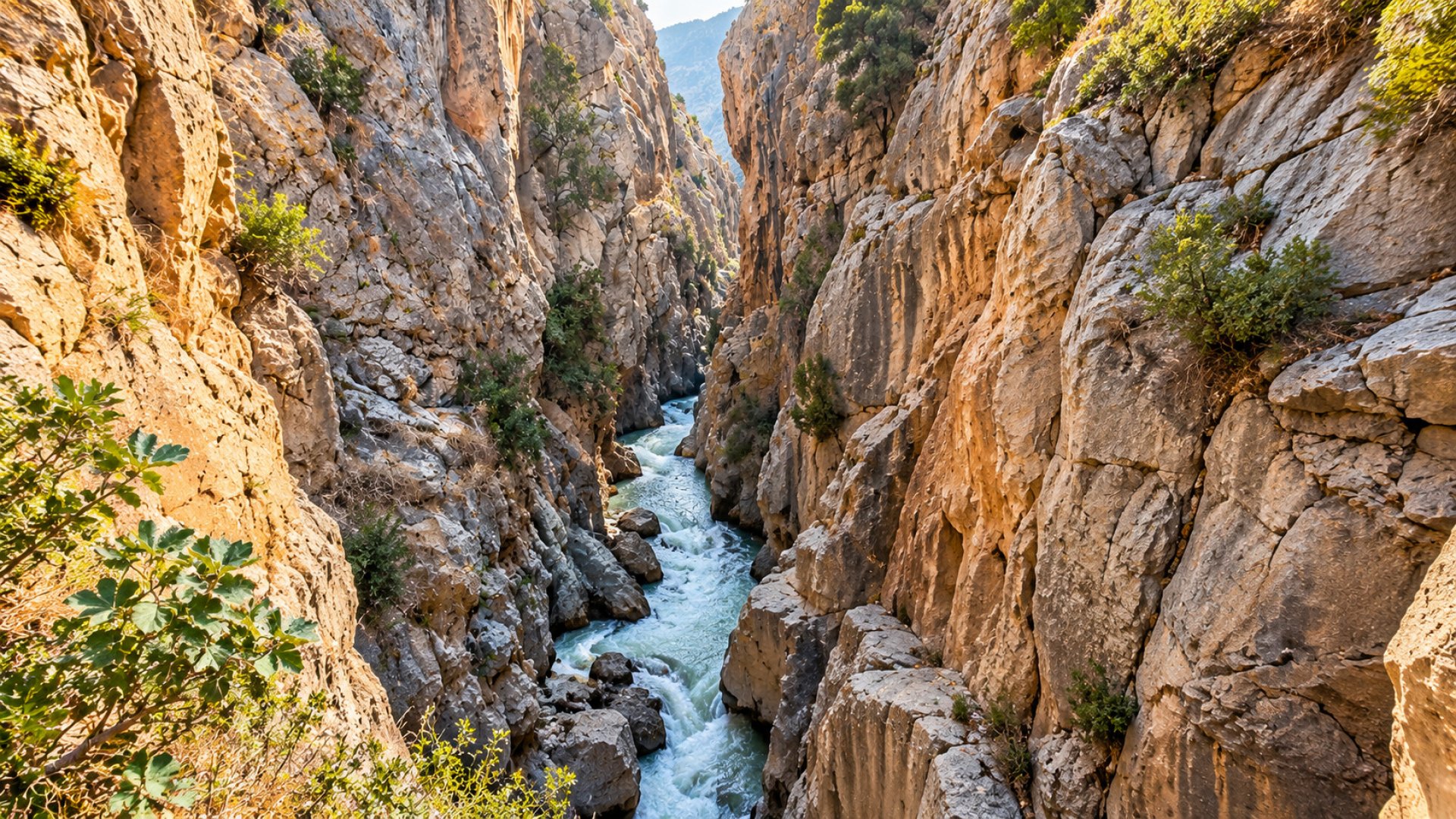
Suspended along the vertical walls of the Desfiladero de los Gaitanes gorge, with wooden walkways reaching more than 100 metres above the Guadalhorce River, Caminito del Rey attracts visitors from all over the world.
However, what makes this extraordinary place truly special is not just its breathtaking scenery. Behind these dramatic cliffs lies a fascinating story of engineering, railways, industrial development and hydroelectric power that helped transform Málaga at the beginning of the 20th century.
Today, Caminito del Rey is considered one of the must-see attractions in Andalusia and an unforgettable day trip for anyone spending their holidays in Marbella or the Costa del Sol.
Much more than a mountain walkway
Caminito del Rey was not originally built as a tourist attraction.
At the beginning of the 20th century, the Sociedad Hidroeléctrica del Chorro needed to connect its hydroelectric facilities at Gaitanejo and El Chorro.
Workers required a safe route to move between installations, transport materials and carry out maintenance in an area that was otherwise extremely difficult to access.
Construction began in 1901 and was completed in 1905.
Building a pathway along almost vertical rock faces, using the limited technology available more than a century ago, was an extraordinary engineering achievement.
One particularly fascinating detail is that sailors from Málaga participated in the construction.
Accustomed to working high above the decks of ships, climbing masts and handling ropes, these men possessed skills that proved invaluable when working suspended over the gorge.
Imagine constructing narrow concrete walkways while hanging from ropes more than 100 metres above the river!
Even today, as we comfortably walk along the modern wooden platforms, we can still see sections of the original pathway beneath our feet.
They provide a remarkable reminder of the courage and ingenuity required to build this extraordinary route.
Rafael Benjumea and Málaga's hydroelectric revolution
One of the most important figures behind the development of El Chorro was Rafael Benjumea y Burín, born in Seville in 1876.
Benjumea moved to Madrid to study civil engineering, graduating in 1901 at the top of his class.
Shortly afterwards, he married Isabel Heredia Loring, a member of one of Málaga's most influential industrial families, and established his life in the city.
He became one of the driving forces behind the development of hydroelectric power in the Guadalhorce Valley.
In 1903, the Sociedad Hidroeléctrica del Chorro was founded, and Benjumea personally directed a series of engineering projects that were remarkably advanced for their time.
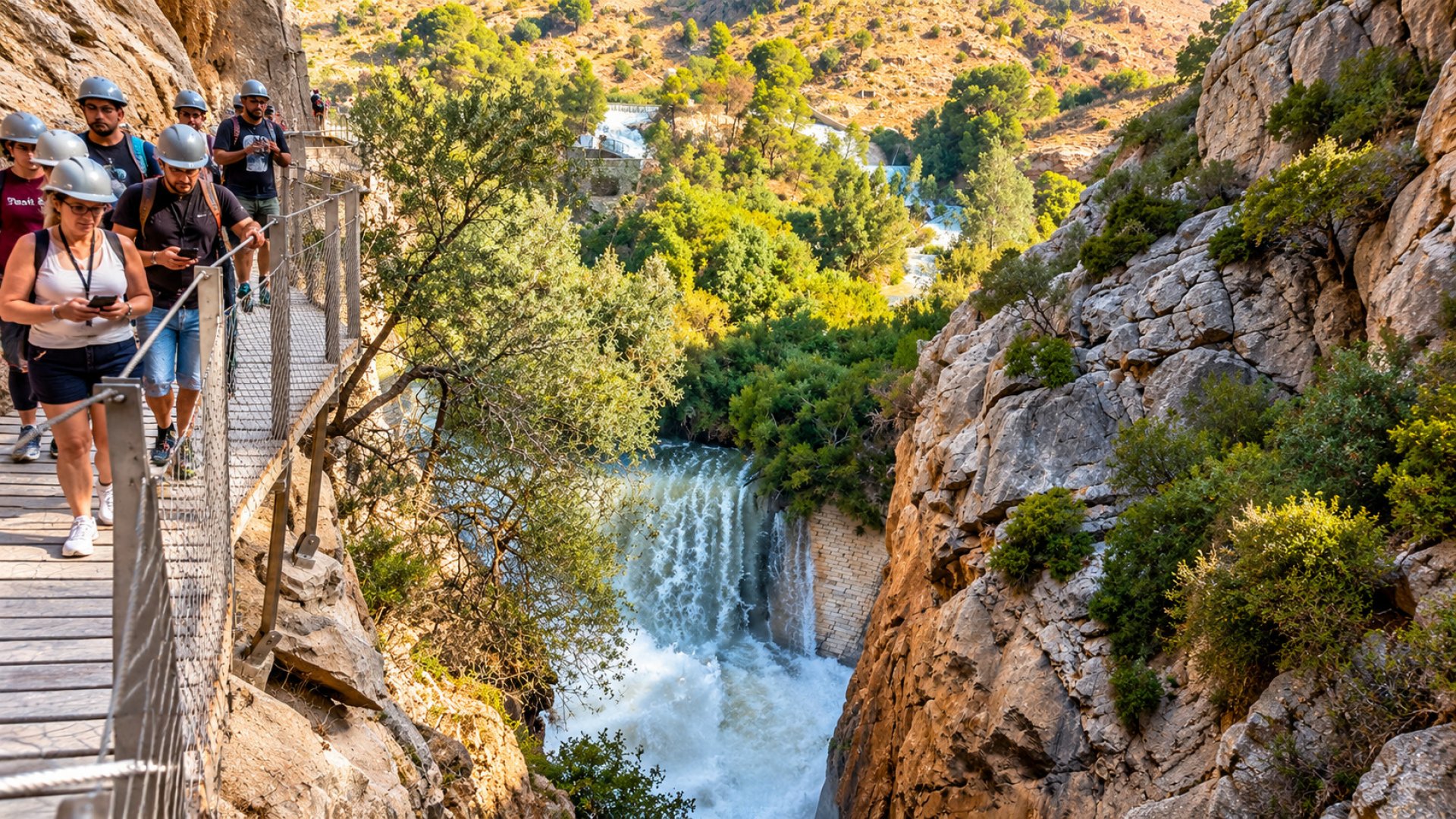
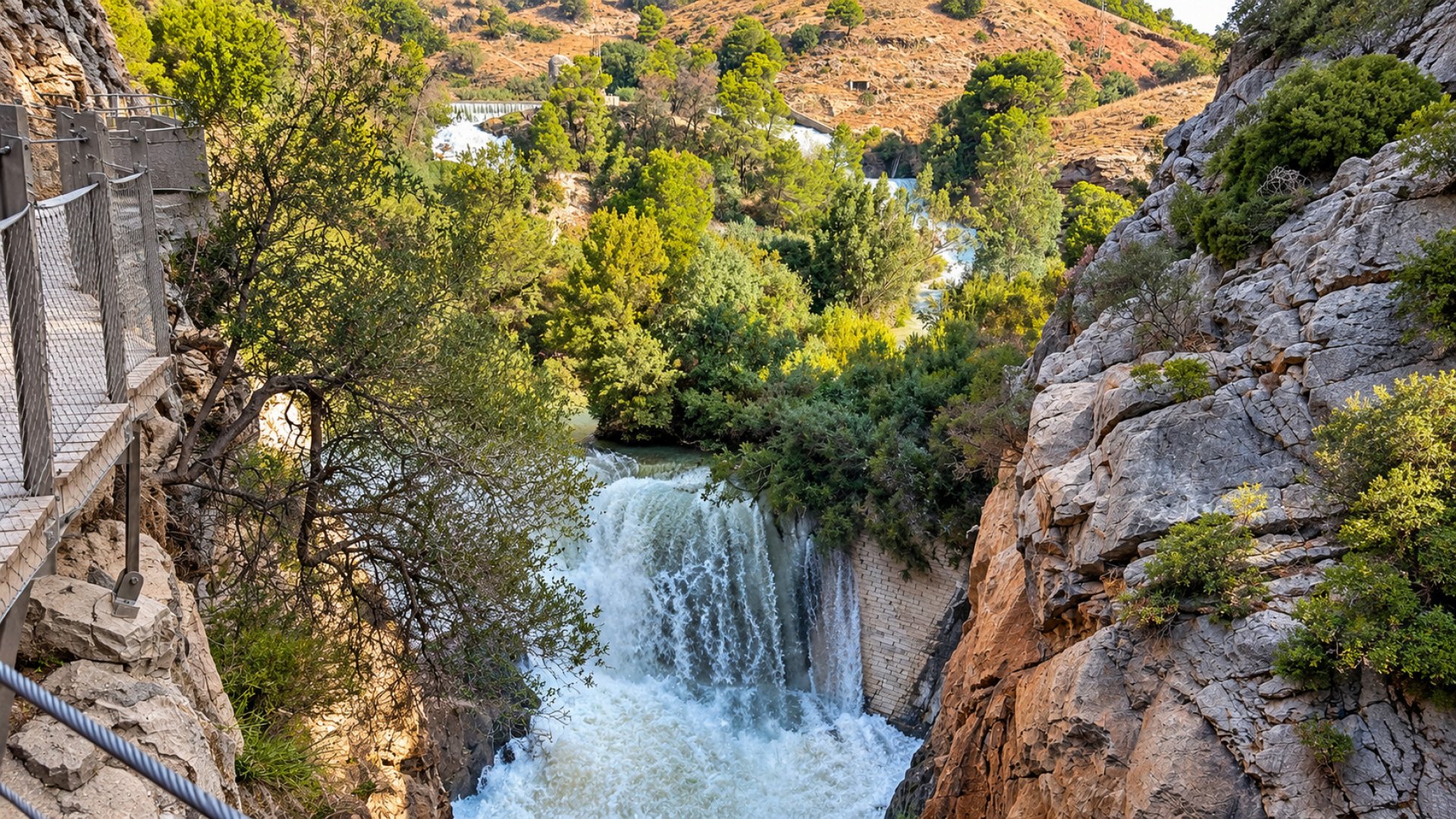
The hydroelectric installations used the natural elevation differences of the Guadalhorce River to generate electricity and supply Málaga with more affordable and efficient energy.
This represented an important step in the region's industrial development.
At the time, Málaga already had foreign-owned electricity companies, including German and British interests, which relied largely on steam-powered generation.
Hydroelectric technology offered a more competitive alternative, helping improve electricity supplies and reduce costs.
The success of these projects extended far beyond electricity production.
They contributed to Málaga's industrial growth, supported the development of its tram network and helped finance the construction of the impressive Guadalhorce reservoir.
The railway: another engineering wonder of El Chorro
Long before Caminito del Rey existed, engineers had already faced another extraordinary challenge in this mountainous landscape: building a railway through the Desfiladero de los Gaitanes.
The Córdoba–Málaga railway reached El Chorro during the 19th century, transforming the entire area.
Tunnels carved directly into the mountains, bridges suspended between cliffs and railway tracks running through seemingly impossible terrain remain impressive engineering achievements.
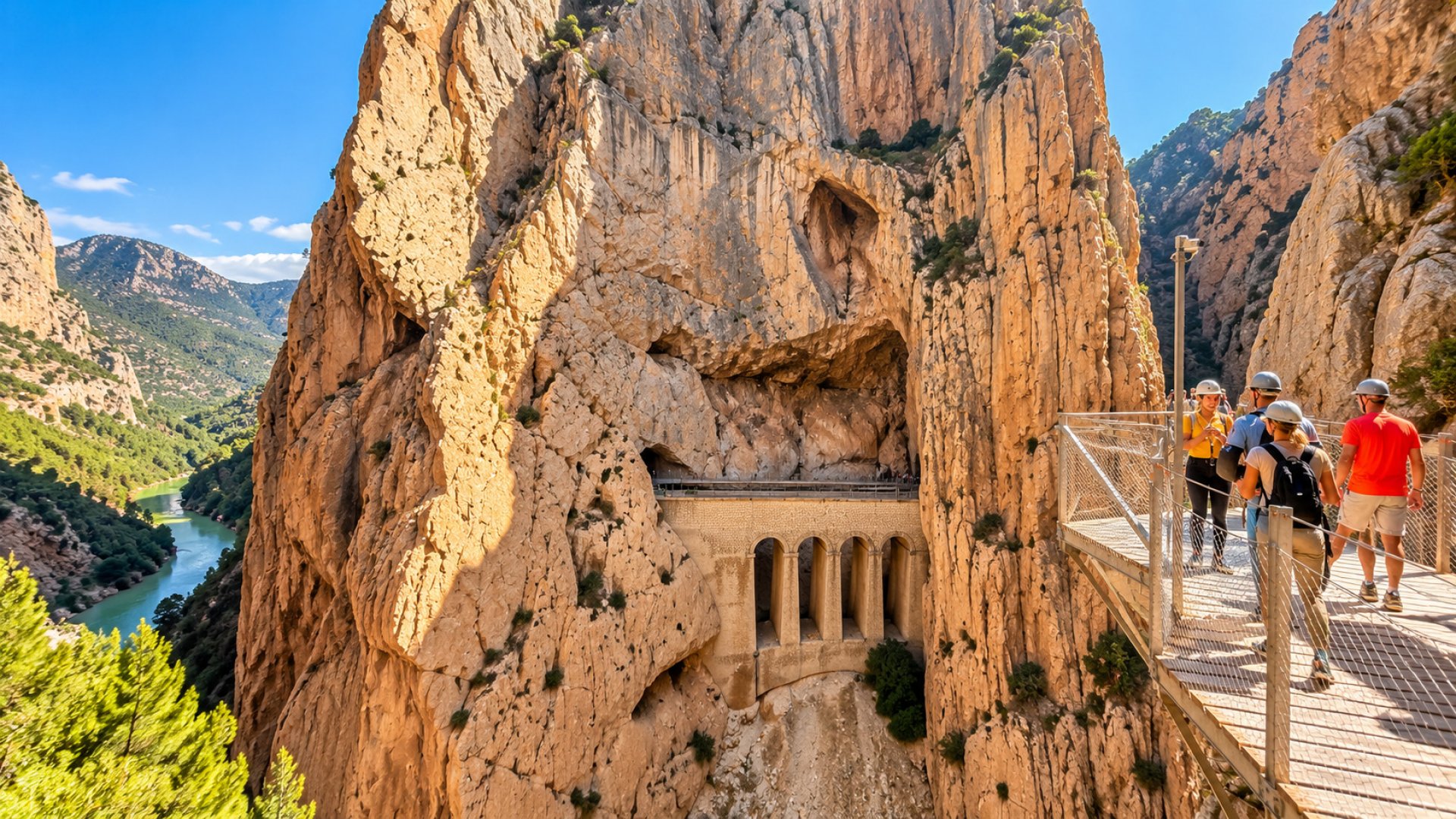
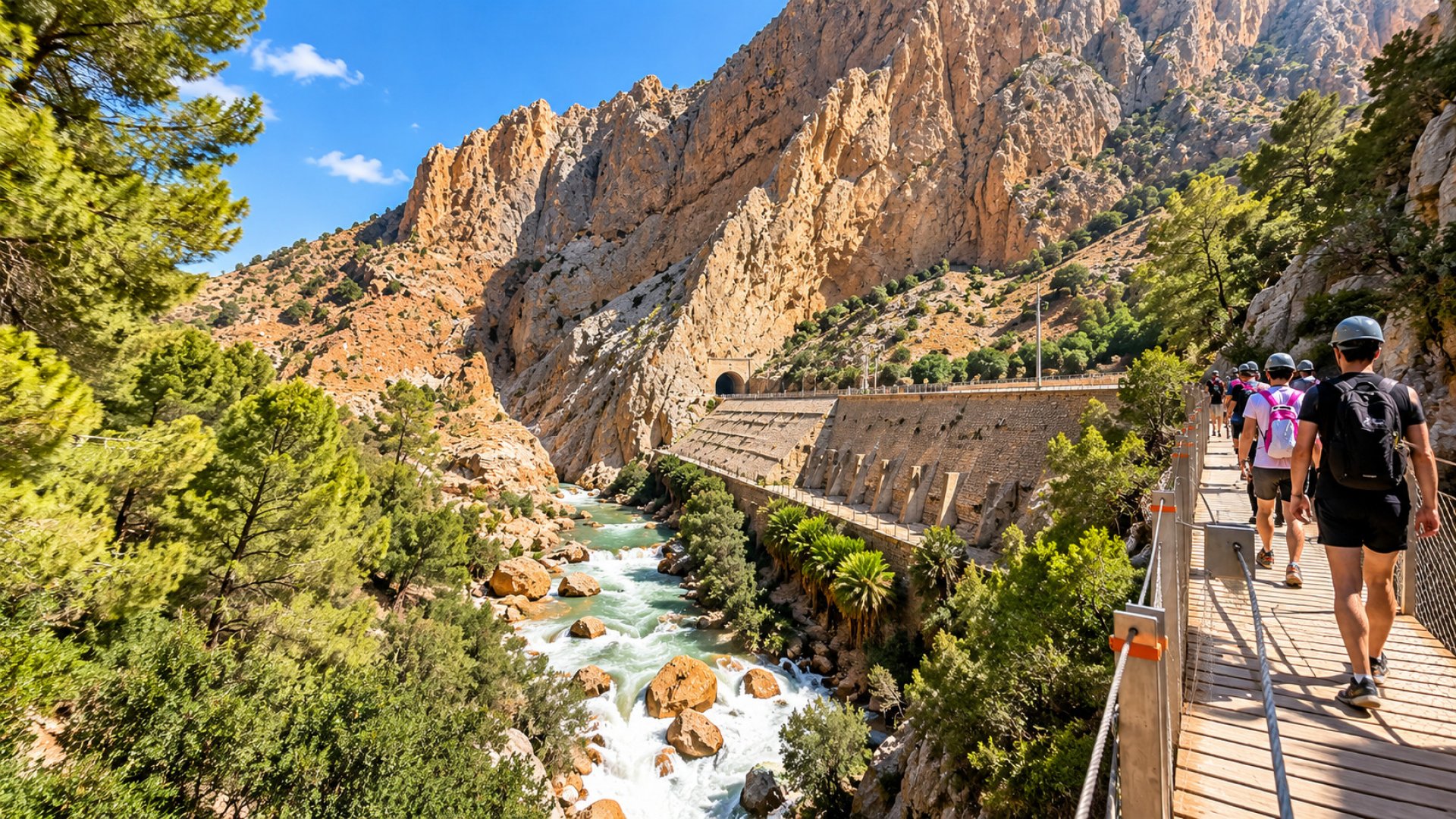
During the Caminito del Rey walk, you can see the railway repeatedly appearing and disappearing through tunnels on the opposite side of the gorge.
The railway played an essential role in transporting people, machinery and construction materials.
It was particularly important during the development of the hydroelectric facilities and the construction of the Guadalhorce dam, when road connections were extremely limited.
This combination of spectacular natural scenery, railway engineering and industrial history makes Caminito del Rey much more interesting once you understand its origins.
Why is it called Caminito del Rey?
The name, which translates as "The King's Little Pathway", dates back to 1921.
That year, King Alfonso XIII of Spain visited El Chorro for the inauguration of the Guadalhorce dam.
During his visit, the king walked along part of the pathway built above the gorge.
From that moment, local residents began referring to it as Caminito del Rey.
Rafael Benjumea was later awarded the noble title of Count of Guadalhorce in recognition of his engineering achievements.
However, the pathway was not reserved for engineers or important visitors.
For decades, it served as a practical connection between communities living around the gorge.
Workers, local residents and even children travelling to school used these narrow walkways.
People crossed the gorge to visit relatives, go shopping or reach neighbouring settlements.
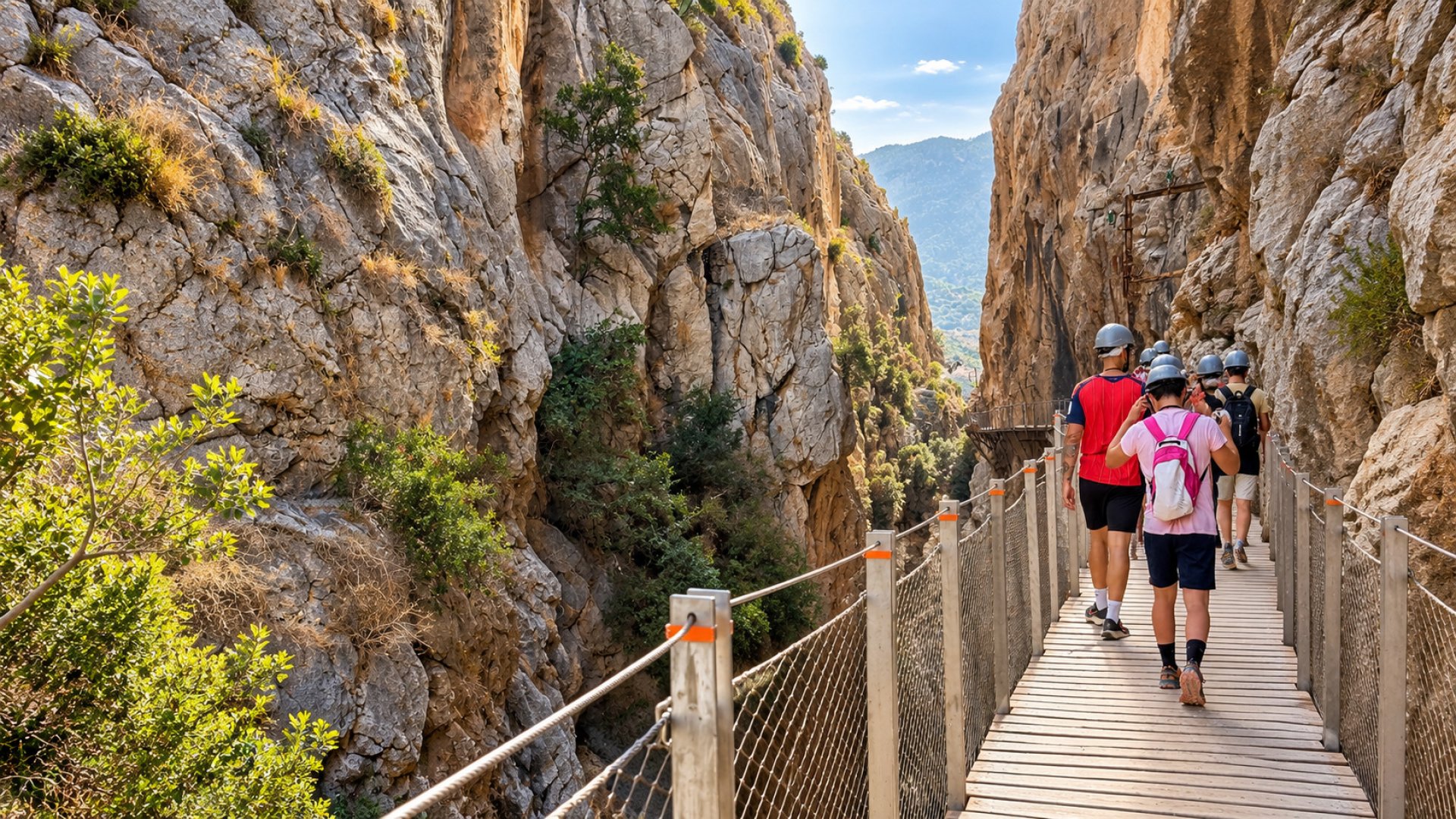
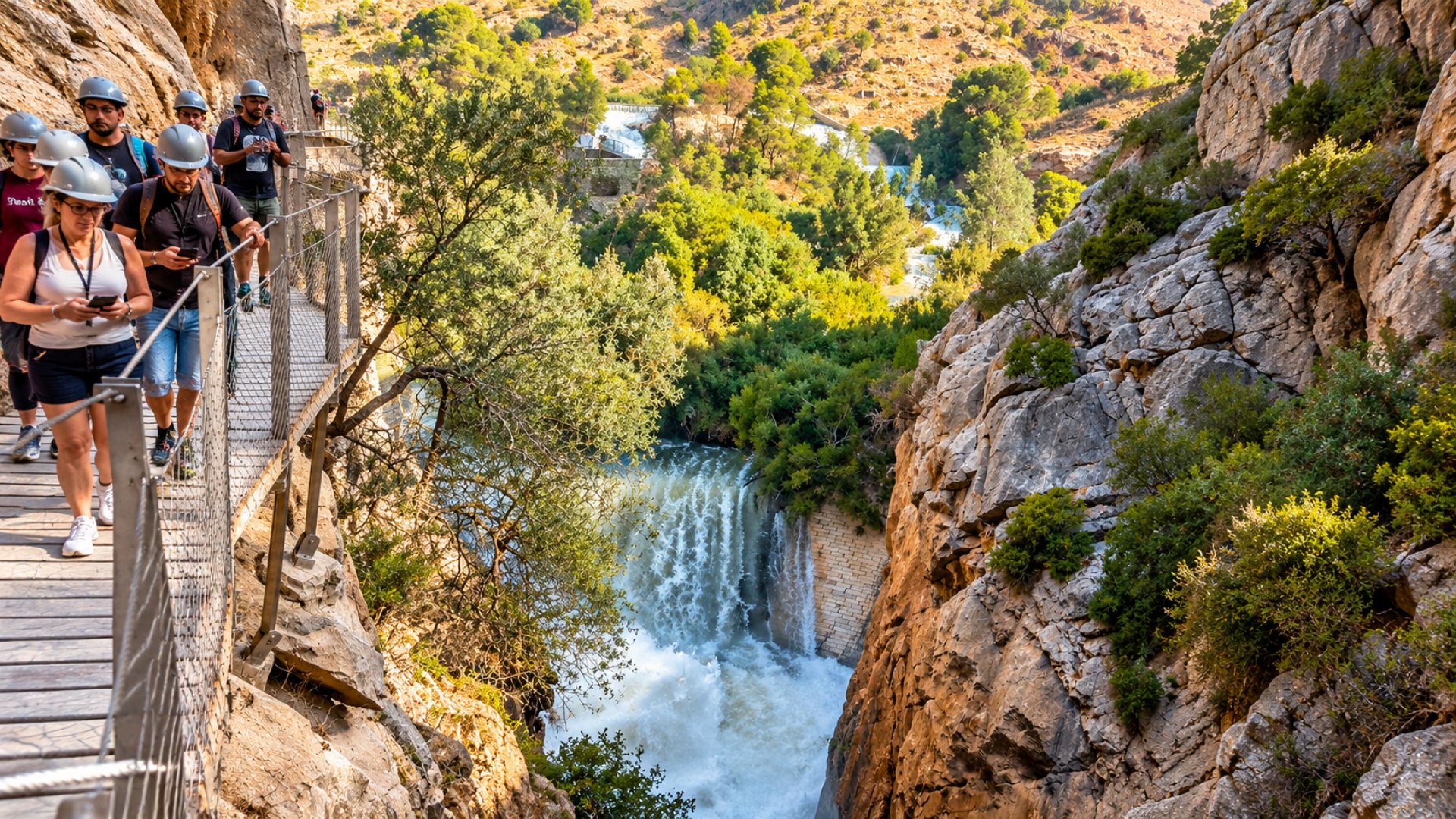
It is difficult to imagine this today, especially when walking along the restored pathway wearing a safety helmet!
Caminito del Rey and Frank Sinatra: a Hollywood connection
The dramatic scenery of El Chorro also attracted the attention of Hollywood.
During the 1960s, scenes from Von Ryan's Express (1965), starring legendary American singer and actor Frank Sinatra, were filmed in this area.
The spectacular railway tracks, tunnels and mountainous surroundings of El Chorro appear in several sequences of the film.
Frank Sinatra himself can be seen in scenes involving the railway.
During filming, Sinatra stayed at the historic Hotel Pez Espada in Torremolinos, one of the most iconic hotels on the Costa del Sol during its glamorous early tourism years.
This is a particularly interesting detail to remember while walking along Caminito del Rey.
The railway tracks visible across the gorge were once part of a major Hollywood production starring one of the most famous entertainers of the 20th century.
From one of the world's most dangerous paths to a spectacular tourist attraction
Over the decades, the original Caminito del Rey gradually deteriorated.
Sections of the concrete pathway collapsed, railings disappeared and some areas became extremely dangerous.
For years, it gained international fame as one of the most dangerous walkways in the world.
Despite the risks, adventurous visitors continued attempting to cross it.
Eventually, the authorities closed the route and launched an extensive restoration project.
Caminito del Rey officially reopened to visitors in 2015, with new wooden walkways installed above the remains of the original structure.
Modern safety systems, controlled access and protective equipment transformed the experience.
Today, visitors can enjoy the spectacular scenery without facing the extreme dangers associated with the old pathway.
One of the most fascinating aspects of the walk is looking down and discovering the remains of the original concrete structures beneath the modern platforms.
How long does it take to walk Caminito del Rey?
The complete route covers approximately 7.7 kilometres, including the access and exit paths.
The official estimated duration is around 3 to 4 hours.
However, the actual time depends on your walking speed, the number of stops you make for photographs and any waiting times along the route.
Our recommendation is simple: don't rush.
Caminito del Rey is an experience to enjoy at a comfortable pace.
Take time to admire the enormous cliffs, look down into the gorge, discover the original walkways and watch the trains emerging from tunnels carved into the mountains.
The scenery is truly extraordinary.
What should you bring to Caminito del Rey?
Comfortable walking shoes are essential.
We also strongly recommend bringing at least one litre of drinking water per person, especially during the warmer months.
There are no shops or cafés along the actual walkway, so visitors should arrive properly prepared.
At the end of the route, in the El Chorro area, you can purchase water and other drinks. A little further along, near the railway station, there are several bars and restaurants where you can enjoy food and refreshments.
Safety helmets are provided by the Caminito del Rey organisation and must be worn during the visit.
Please note that children under 8 years old are not permitted. Children aged 8 and above must carry original identification confirming their age, and visitors under 18 must be accompanied by an adult.
Where to eat after Caminito del Rey: La Garganta
After several hours of walking, enjoying a relaxing lunch in the surrounding area is an excellent idea.
One restaurant we particularly recommend is La Garganta, located in El Chorro, close to the end of the walking route.
It is a wonderful place to sit down, enjoy a meal and admire the surrounding mountain scenery before returning to Marbella.
For visitors interested in discovering traditional Andalusian cuisine, another interesting option is Casa Pepa in Carratraca.
This historic family-run restaurant is famous for its traditional Málaga cooking and its distinctive atmosphere, preserving the spirit of the region's old-fashioned country restaurants.
Both are excellent options for turning your Caminito del Rey visit into a complete day out.
How to get to Caminito del Rey from Marbella
Caminito del Rey is approximately 67 kilometres from Marbella by road, with a typical driving time of around 1 hour and 10 minutes, depending on traffic.
Travelling by car is generally the most convenient option for visitors staying in Marbella.
However, there is one important detail to understand before planning your visit.
Caminito del Rey is a one-way walking route.
The northern entrance is located near Ardales, while the southern exit is in El Chorro.
There is also an additional walk between the parking areas and the actual entrance to the wooden walkways.
A shuttle bus connects the northern and southern ends of the route, allowing visitors to return to their starting point.
We recommend planning your parking arrangements carefully and allowing plenty of extra time before your scheduled entrance.
The organisation advises visitors to arrive at the access control point 30 minutes before their reserved entry time.
Remember that reaching the parking area does not mean you have reached the entrance.
Our advice for visitors travelling from Marbella is to leave early and dedicate a full day to the excursion.
This allows you to enjoy the walk, have lunch in El Chorro and return to the coast without rushing.
Can you reach Caminito del Rey by train?
Yes, and travelling by train is particularly interesting considering the area's fascinating railway history.
The El Chorro–Caminito del Rey railway station is located near the southern end of the walking route.
Train services connect Málaga with El Chorro, although schedules and availability should always be checked in advance.
For visitors staying in Marbella, travelling by car is usually easier.
However, it is possible to reach Málaga first and continue by train to El Chorro.
We recommend checking the latest services and timetables with Renfe, Spain's national railway operator, before planning your journey.
How to buy tickets for Caminito del Rey
This is probably the most important piece of advice in the entire article:
Book your Caminito del Rey tickets well in advance!
The attraction welcomes visitors from all over the world, and tickets for popular dates can sell out quickly.
Tickets should be purchased through the official Caminito del Rey website.
There are two main ticket options:
General admission – €10
This ticket allows you to complete the route independently, enjoying the scenery at your own pace.
Official guided tour – €18
This option includes admission and the services of an official guide.
Guided tours are available in Spanish and English and provide additional information about the history, engineering and natural environment of Caminito del Rey.
To purchase tickets, simply visit the official website, choose your preferred date and time, select the ticket type and indicate the number of visitors.
After purchasing, you must access your user account and personalise each ticket before downloading it.
We recommend checking current availability and prices directly on the official website:
Official website: https://www.caminitodelrey.info
What if Caminito del Rey tickets are sold out?
Don't give up immediately!
Ticket availability can change, and additional places may occasionally become available.
Another possibility is booking through an authorised tourism company offering organised excursions with admission included.
However, if visiting Caminito del Rey is one of your priorities during your stay in Marbella, our recommendation is to reserve your tickets as soon as you know your holiday dates.
This is particularly important during spring, autumn, weekends and holiday periods.
And if you still haven't managed to get your tickets, don't worry! Get in touch with us and we'll let you know how we can help you get them. We might still have a solution for you!
One of our favourite day trips from Marbella
Marbella is internationally famous for its beautiful beaches, Mediterranean climate, Puerto Banús and relaxed coastal lifestyle.
However, one of the greatest advantages of staying in Marbella is its location.
Within a relatively short drive, visitors can leave the Mediterranean coastline behind and discover some of Andalusia's most spectacular mountain landscapes.
And few places demonstrate this better than Caminito del Rey.
In just over an hour from Marbella, you can find yourself walking along wooden platforms suspended more than 100 metres above a river, surrounded by enormous limestone cliffs, while trains appear and disappear through tunnels carved into the mountains.
But understanding the history behind this extraordinary place makes the experience even more memorable.
You are not simply walking along a scenic mountain trail.
You are exploring the site of one of Málaga's most ambitious industrial projects of the early 20th century.
You are following the footsteps of engineers, workers and sailors who built pathways suspended above the gorge.
You are crossing a route once used by local families as part of their everyday lives.
You are discovering a landscape transformed by the arrival of the railway in the 19th century.
You are looking at the same railway tracks that Hollywood used in a film starring Frank Sinatra.
And you are witnessing the legacy of an engineering project that helped bring electricity and industrial development to Málaga.
Today, travellers from all over the world come to experience Caminito del Rey.
At La Romana Marbella, we believe it is one of the most rewarding excursions for anyone wanting to discover more than the beaches of the Costa del Sol.
If you are spending a few days in Marbella and would like to explore the extraordinary natural and historical heritage of Andalusia, we highly recommend setting aside a full day for this experience.
Nature, history, engineering and some of the most spectacular scenery in southern Spain, all in one unforgettable day trip.
Caminito del Rey is undoubtedly one of the must-see attractions during your holiday in Marbella.